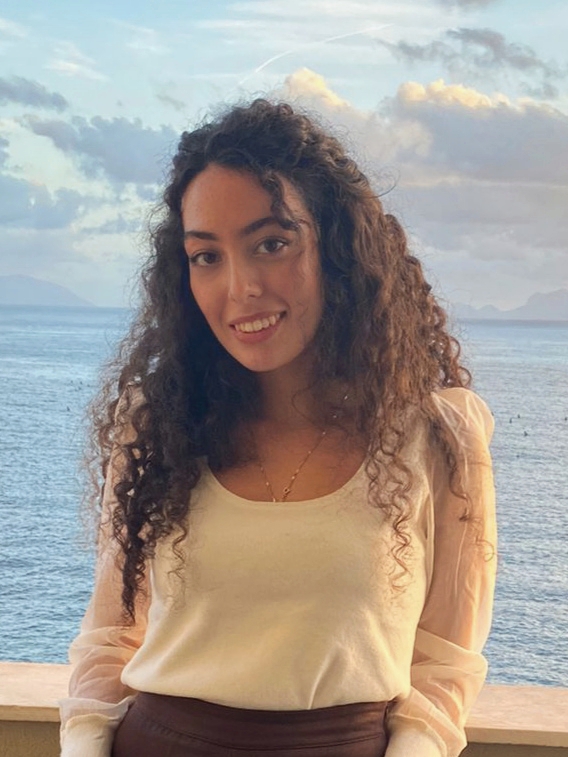
PhD Student
saraverde98@outlook.com
Sara Verde is a Ph.D. student in Medical Biotechnologies and Translational Medicine.
She got her bachelor’s degree in Biotechnology for Health in 2021 and her master’s degree in Pharmaceutical Biotechnology in 2023, both at University of Naples, “Federico II”.
She was awarded a scholarship financed by POR Campania FSE 2014-2020 obtaining a certificate as technician in Technology Transfer and Industrial Enhancement in Research.
Her current research focuses on exploring new diagnostic tools for rare diseases.
Music is a universal phenomenon that influences human experiences across cultures. We investigate whether music can be decoded from human brain activity measured with fMRI, by modeling mappings between neural data and latent representations of musical stimuli. Our approach integrates functional and anatomical alignment techniques to facilitate cross-subject decoding. Starting from the GTZan fMRI dataset, where five participants listened to 540 musical tracks from 10 genres, we used the CLAP...
In everyday behaviour, the ability to stop an already initiated action is critical for ensuring both your safety and that of others; for example, when stopping a reaching movement towards a hot stove-top after realising it is hot. Neuroscientific evidence points towards the critical role of several regions in the right prefrontal cortex in the coordination and execution of this response inhibition-specifically the right inferior frontal gyrus (rIFG) and the right dorsolateral prefrontal cortex...
Pheochromocytomas and paragangliomas (PPGLs) are rare neuroendocrine tumours that usually present with symptoms related to catecholamine excess. However, a small subset may secrete cytokines such as interleukin-6 (IL-6), leading to atypical systemic manifestations and delayed recognition of a paraneoplastic inflammatory syndrome. We report the case of a middle-aged woman with a previously diagnosed non-secreting cervical paraganglioma who developed fever of unknown origin (FUO), anaemia and...
CONCLUSIONS: This study demonstrates that general-purpose LLMs, operating without specialized model training or fine-tuning, can effectively serve as intelligent agents for automated radiotherapy TP, specifically addressing the BAO problem. This flexible and scalable framework has the potential to enhance clinical decision-making workflows in radiotherapy. Future research directions include exploring more comprehensive and clinically nuanced reward functions and extending the methodology to...
This study proposes an automated approach to radiotherapy treatment planning by integrating a reinforcement-learning-style iterative framework with a multimodal Large Language Model (LLM). We specifically investigate the problem of Beam Angle Optimization, a high-dimensional and non-convex subproblem of Treatment Planning. Our system employs GPT-4V to select candidate beam angles and analyze three-dimensional dose distributions generated by Monte Carlo simulations within the MatRAD environment....
Created by An:Ca © 2025 Tor Vergata University P.I. 02133971008 – C.F. 80213750583